
Moving to Australia is easier to manage when the process is broken into stages. Rather than trying to organise everything at once, it can help to separate what needs to be done before departure, what needs to happen soon after arrival and what can be arranged during the first few weeks.
This section is a practical checklist for planning your move. It does not replace the more detailed information in the Lifestyle, Costs and Budgeting or Life in Australia sections. Instead, it brings the main preparation steps together so you can see what should be organised, checked or kept handy before and after you arrive.
Download the Pre-departure Guide
1. before you leave for australia
- Check your passport validity and keep a copy of your visa grant notice.
- Confirm that your flight booking uses the same name as your passport.
- Keep copies of employment documents, professional registration documents and any offer letters.
- Check biosecurity and customs rules before packing food, plant material, medicine, animal products, wooden items or outdoor equipment. If you are unsure whether an item must be declared, declare it on arrival or do not bring it.
- Arrange international shipping for personal belongings if required, and confirm expected delivery timeframes so you can plan what essential items to bring with you for the first few weeks.
- Research temporary accommodation for your arrival period.
- Arrange international shipping for personal belongings if required. Personal and household goods entering Australia may be subject to biosecurity assessment and inspection, particularly items made from timber or materials that may carry soil, plant or animal contaminants.
- If travelling with pets, check import permit requirements, health documentation and quarantine rules well in advance. The process can be complex and may involve preparation over several months before travel.
- Check what documents may be needed for banking, employment, school enrolment, healthcare and driver licensing.
- If you plan to drive, check whether you need an International Driving Permit before leaving your home country.
- Pack power adapters, essential medication, basic toiletries and practical items for the first few days.
- Keep important documents secure in your hand luggage during your flight and store digital copies securely.
Declaring Items When Entering Australia
When travelling to Australia, you must declare certain goods on arrival, including food, plant material and animal products. Failure to declare items can result in fines, penalties or delays at the border.
2. when you arrive
- Confirm your transport from the airport and check in to your temporary accommodation.
- Ensure you can access funds for immediate expenses on arrival, noting that bank accounts and payment methods may not be fully active straight away.
- Buy or activate a mobile phone plan so you can receive calls, verification codes and service updates.
- Open or activate an Australian bank account.
- Apply for a Tax File Number after arrival if you have work rights and will be working in Australia.
- Provide your TFN to your employer and bank once it is received.
- Choose or confirm your superannuation arrangements when starting work.
- Enrol in Medicare if you are eligible.
- Arrange private health insurance or overseas visitor health cover if required.
- Find a local GP or medical clinic before there is an urgent need.
- Begin your longer-term rental search if you are not already in permanent accommodation.
3. during the first few weeks
- Set up utilities, internet and household basics once you secure accommodation.
- Learn your local public transport system, travel card or ticketing app.
- Check overseas licence rules, licence transfer requirements and vehicle registration rules in your state or territory.
- Finalise school or childcare arrangements if relevant.
- Locate nearby supermarkets, pharmacies, medical clinics and emergency services.
- Update your address with your employer, bank, insurer, school, health provider and any relevant government services.
- Keep a simple contact list for your employer, landlord or property manager, GP, school, insurer and emergency contacts.
4. settling into your new routine
- Review your household budget after the first month and adjust it against actual costs.
- Review ongoing household expenses and adjust subscriptions, utilities or services as needed.
- Confirm your regular commute, school, childcare, shopping and healthcare routines.
- Confirm ongoing arrangements with a regular GP or medical clinic, including access to repeat prescriptions and test results.
- Save key local contacts, including your GP, school, property manager, employer, insurer and emergency contacts.
- Learn local council services such as bins, recycling, libraries, parks and community facilities.
- Join relevant community, school, sport, cultural, faith or professional networks.
- Check whether any licence, registration, insurance, employment or visa-related deadlines are coming up.
- Keep important documents updated and stored securely.
- Revisit the Pre-departure Guide and tick off any remaining setup tasks.
documents to keep accessible

Keep both physical and digital copies of key documents so they are easy to access when needed:
- Passport
- Visa grant notice or visa status confirmation
- Employment contract, offer letter or placement details
- Professional registration, licensing or skills assessment documents
- Driver licence and International
- Driving Permit if required
- Birth certificates and marriage certificate where relevant
- School records for children
- Vaccination, medical or prescription records I
- nsurance documents
- Certified translations of key documents, if required
- Rental references or accommodation booking confirmations if available
A practical final reminder
Your move does not need to be perfect on day one. The aim is to arrive with the essentials organised, know which tasks need to happen first and avoid delays with documents, banking, tax, healthcare, transport and accommodation.
Good preparation gives you more room to focus on the human side of the move: starting work, helping family members settle, learning local routines and building confidence in a new environment.
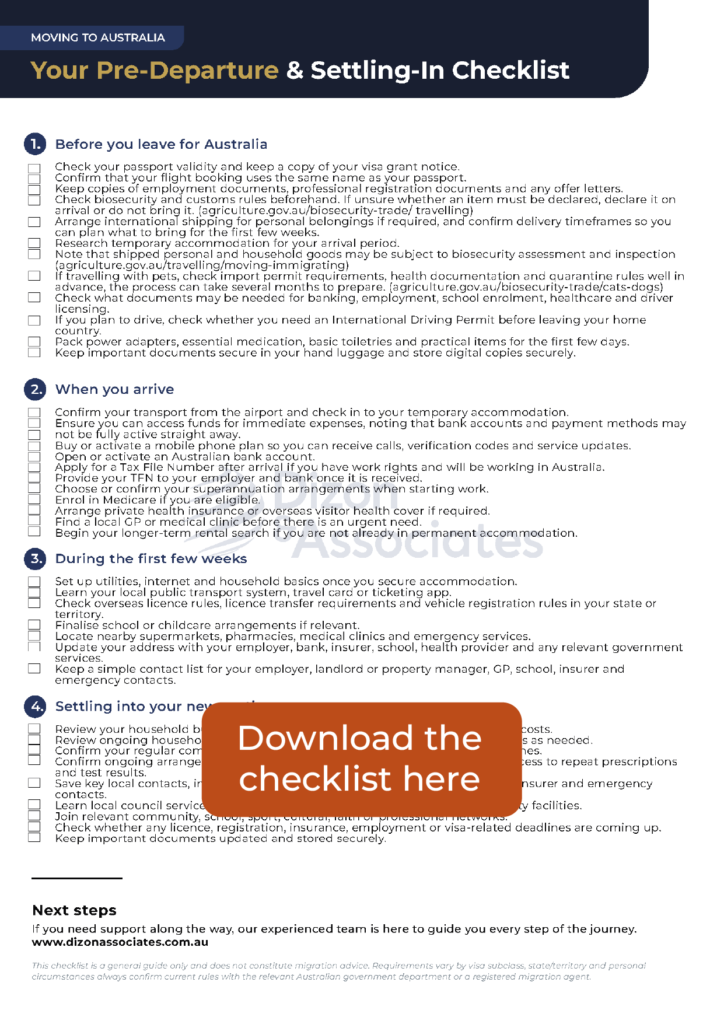
Your Pre-Departure & Settling-In Checklist
Moving to Australia involves a lot of moving parts from visa paperwork to setting up a bank account once you land. This free checklist walks you through what to sort out before you leave, when you arrive, and during your first few weeks and months, so nothing important slips through the cracks.
get the help you need
Submit your details and upload any relevant documents. We will contact you to discuss your options and next steps.
contact us Directly
Australia
-
Melbourne (Head Office)
Collins Square
Level 23, Tower 5, 727 Collins St
Docklands VIC 3008 -
Sunshine
Level 5, 12 Clarke St
Sunshine VIC 3020 - +61 1300 779 462
South Africa
-
Willowbridge Village
39 Carl Cronje Dr
Bellville, Cape Town 7530 - +27 21 110 5412
Disclaimer: The information provided on this page is general in nature and does not consider your individual situation. Visa eligibility, skills assessment requirements, professional registration requirements and outcomes can vary depending on your specific circumstances.
This content should not be relied upon as migration, skills assessment or professional registration advice. For advice tailored to your situation, you can book a consultation with our team.